
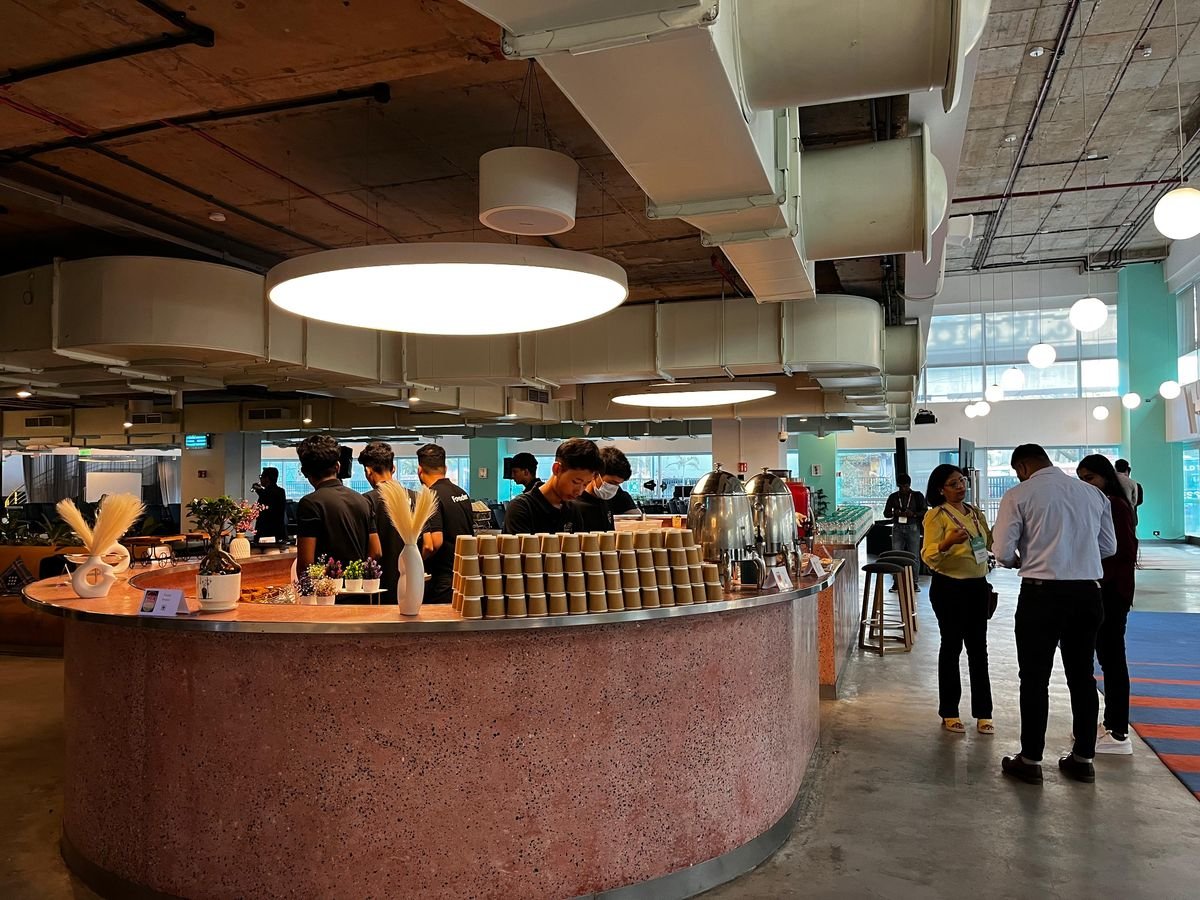
Most people shortlisting caterers ask two questions: "What's your menu?" and "How much does it cost?" Those are necessary — but not sufficient. The questions that reveal whether a catering company can actually be trusted with your event are the ones about what happens when things don't go as planned. The late headcount change. The venue access that wasn't what anyone expected. The team lead who calls in sick the morning of your event.
This post gives you 10 specific questions to ask any caterer before your corporate event — what a strong answer looks like, and what should give you pause.
Why corporate event catering requires different questions
Corporate events have specific pressures that private events don't. Your headcount changes until 48 hours before. Your guest list spans a wide range of dietary requirements — at many Bangalore MNC offices, the vegetarian percentage is high, Jain guests are common, and diabetic and gluten-free requirements arrive in the same room. Your event has a precise timeline that cannot slip because a speaker is scheduled, a room is booked, or transport is fixed.
And unlike a private event, your professional credibility is on the line. If the food arrives late, runs short, or doesn't account for your guests' dietary needs, it reflects on you — the person who organised it.
The questions you'd ask a wedding caterer ("Can we do a tasting?" "Will you manage the cake?") don't tell you anything useful here. These 10 questions do.
Questions about experience and team
Q1: How many corporate events of this size and format have you done in the last 12 months?
Any caterer can tell you they've done corporate events. This question asks for recent, specific experience in your exact format. A team that has run 25 hi-teas for 80–150 guests this year brings a different level of pattern recognition than one for whom yours is the third.
What a strong answer sounds like: A specific number, the format described, possibly a reference to a comparable venue type.
What should give you pause: "Yes, we do a lot of corporate work" without answering the format question. Volume without specificity tells you nothing useful.
Q2: Who will be the on-site lead on the day — and can I speak to them before we confirm?
The person you've been in conversation with during planning is rarely the person running your event on the day. The on-site lead makes real-time decisions — setup timing, portion management, responding to problems as they arise. You should know who that person is, and ideally have spoken to them, before you commit.
What a strong answer sounds like: A named individual with a described role, and a willingness to connect you before the event.
What should give you pause: "Our team handles it" without naming anyone. If no single person owns the outcome, no single person is accountable for it.
Q3: What's your contingency if a key team member is unavailable on the day?
This happens more than caterers like to admit — illness, transport delays, a family emergency. Professional operations have a backup plan built in.
What a strong answer sounds like: A named backup, a team structure that doesn't rely on any one person, or a clear protocol for pulling in cover staff.
What should give you pause: A surprised reaction to the question, or "that hasn't happened to us." Experience doesn't prevent contingencies — preparation does.
Questions about operations and logistics
Q4: Can you manage a headcount change of 15–20% in the 48 hours before the event?
In corporate settings, headcounts shift. Approvals move. Senior leaders get added at the last minute or drop off due to travel. A caterer who can't flex within reasonable notice introduces unnecessary risk into your event.
What a strong answer sounds like: A clear statement of what they can absorb ("we typically plan to a 15% buffer on quantities") and at what point a change affects the final cost.
What should give you pause: A rigid "we need final numbers five days before" with no buffer mechanism — and no explanation of how they'd handle a late change if you pushed them on it.
Q5: What's your setup timeline and what venue access do you need?
Most day-of conflicts originate at setup. A caterer arrives expecting two hours; the previous event is still clearing out. If the venue access window isn't confirmed in advance, the problem lands in your lap on the day.
What a strong answer sounds like: A specific timeline ("for a 150-person buffet, we need 90 minutes minimum, two hours ideally") and a proactive question about your venue's access windows.
What should give you pause: "We'll manage on the day" without probing the logistics. The caterers who don't ask about venue access are the ones who create problems later.
Q6: Have you served at this venue before? If not, are you willing to do a site visit?
Venue familiarity changes execution. Unfamiliar loading bays, limited kitchen access, and unexpected floor plan constraints are all things a site visit resolves before the event, not during it.
What a strong answer sounds like: Confirmation of venue experience, or immediate willingness to visit before confirming.
What should give you pause: Resistance to a site visit, or "we know how to handle any venue." That's confidence without preparation.
Questions about dietary requirements and pricing
Q7: How do you collect and manage dietary requirements — and how do you ensure accuracy on the day?
For a Bangalore corporate event, dietary requirements aren't a small detail. Vegetarian, Jain, diabetic, gluten-free, and nut allergy guests can account for a significant portion of your guest list at most MNC events. For hi-tea and networking formats — where guests often serve themselves from shared stations — accurate labelling and physical separation between dishes matters. If you're planning a hi-tea for a corporate audience, it's worth discussing how your caterer handles this format specifically, since it requires more active dietary management than a plated service.
A caterer who treats this as an afterthought creates problems. Sometimes real ones.
What a strong answer sounds like: A described collection process — a form they send you, integration with your RSVP process, or a checklist — plus an explanation of how requirements are translated to the kitchen and clearly communicated on the day.
What should give you pause: "We always have veg and non-veg options." This doesn't address Jain, gluten-free, or allergy requirements at all.
Q8: Is your quote all-inclusive — food, service staff, equipment, and logistics — or a base cost I'll need to add to?
Base-price quoting is how budget surprises happen. A quote that reads ₹350 per person can reach ₹600 per person once service staff, chafing dishes, serving stations, linen, and transport are added separately. Always know which type of quote you're receiving before you compare vendors.
What a strong answer sounds like: A line-by-line breakdown showing exactly what's included, and a clear statement of what (if anything) is charged separately.
What should give you pause: "We'll send a full breakdown once we confirm details." Ask them to clarify what's always included before you reach that stage.
Questions about references and risk
Q9: Can you introduce me to a client who ran a similar corporate event with you in the last six months?
A confident catering team makes this introduction without hesitation. They have clients who'll take a five-minute call. If a caterer is reluctant to provide references for recent corporate work, that's worth understanding before you commit.
What a strong answer sounds like: A specific client offered, or "let me check with a couple of recent clients and come back to you within a day."
What should give you pause: "We have great reviews on Google." Reviews and a direct reference are not the same thing.
Q10: What's your cancellation and postponement policy?
Leadership events get rescheduled. Budget approvals shift. A venue becomes unavailable. You need to understand your financial exposure before you commit — not after.
What a strong answer sounds like: A clear written policy — what percentage is retained at which stage, whether rescheduling carries a fee, and what flexibility exists for a postponement versus a full cancellation.
What should give you pause: "We'll sort it out if that happens." Verbal reassurance isn't a policy.
Frequently asked questions
How far in advance should I book catering for a corporate event in Bangalore?
For events under 100 guests in standard formats, two to three weeks is typically sufficient. For larger events (150+), conference formats, or events requiring special setup, four to six weeks gives the caterer adequate planning time and protects you if your first choice isn't available on your date.
What's the difference between a per-head quote and an all-inclusive quote?
A per-head quote covers food costs only. An all-inclusive quote covers food, service staff, equipment (chafing dishes, crockery, serving stations, linen), and logistics. Always confirm which you're being given — the gap between the two can be significant, and it's better to know before you compare quotes from different vendors.
How many caterers should I shortlist before choosing one?
Two to three is a practical number. More than three makes comparison unwieldy. Focus on getting clear, specific answers to the questions above from each, and ask all of them for a direct client reference. How a caterer responds to these questions tells you as much as the quote itself.
What should I send a caterer when I first reach out?
Event date, venue address, approximate guest count, preferred format (hi-tea, buffet, seated service), and any known dietary requirements. The more specific your brief, the more accurate — and comparable — the quotes you receive will be.
A caterer who knows their work answers these without hesitation
Asking these questions isn't about being difficult. It's about giving a good caterer the chance to demonstrate that they've handled every one of these situations before — because they have. We're happy to answer all 10 of them.
Tell Us About Your Event